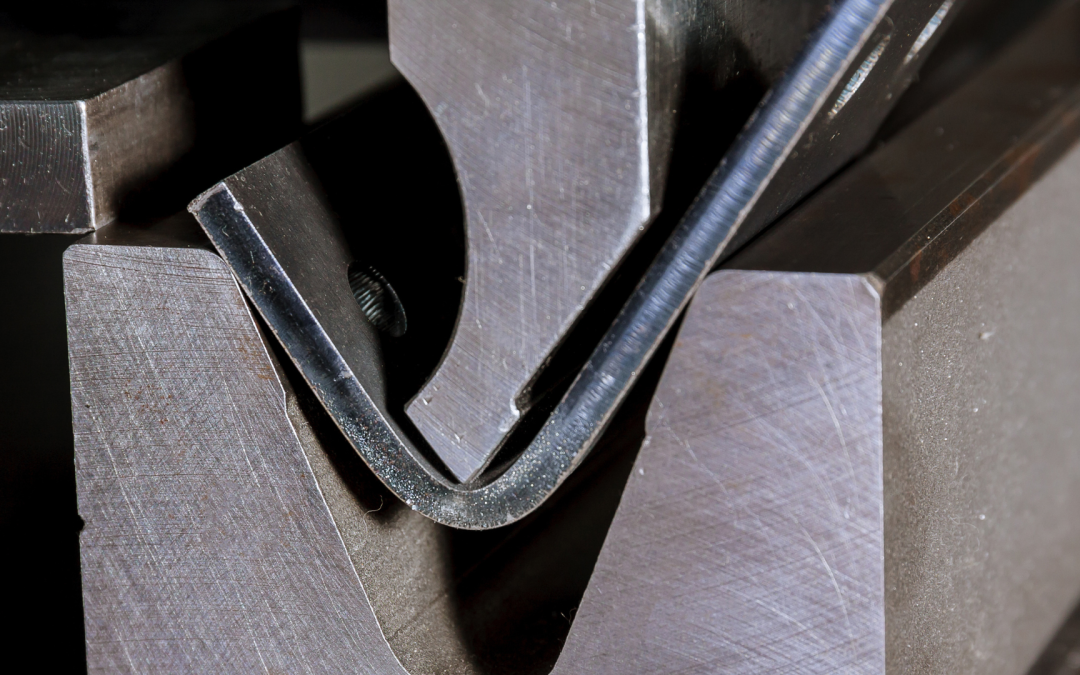
Why tooling choice makes or breaks your bend?
If your bends need rework, it’s usually not the operator; it’s the tooling. The right combination of punch, die opening (V), and material match reduces springback, extends tool life, and shortens setup time. As a BC-based manufacturer of precision press brake tooling serving shops across Canada, we see the same patterns daily: great results come from great tooling fundamentals.
Step 1: Match your standard (American, European, Wila-style)
-
American Standard: Widely used in North America, versatile, and often fastest to source. (Tip: Ideal for general job-shop work and short lead times.)
-
European / Wila-style: Excellent for precision and fast tool changes; popular in high-mix, high-accuracy environments.
Pro move: Keep your most common profiles in your shop’s default standard; add adapters only when a specialty job demands it.
Step 2: Choose the correct die opening (V) for material & thickness
A quick rule of thumb is V-opening ≈ 6–10× material thickness (varies by material and inside radius requirements). Using tighter V-openings increases tonnage and forms sharper radii; larger V-openings reduce tonnage and radius control. Since we make American-standard bottom dies from 1/8″ to 10″ V and acute openings (with optional flame hardening), you can standardize a core library and expand as needed.
Step 3: Pick the right punch profile
-
Gooseneck: Clears flanges for return bends.
-
Acute-angle: For tight angles and air-forming small radii.
-
Hemming tools: For safe, repeatable hems without improvised setups.
We stock and build precision-engineered punches compatible with multiple international standards, plus custom tooling for unusual geometries.
Step 4: Consider material and finish
-
Mild steel: Broadest tolerance window—your generalist tools live here.
-
Stainless: Higher springback; favor sharper punches and optimized V to control radius.
-
Aluminum: Softer, prone to marking—use wider Vs and consider die radiusing/polishing to protect finish.
Step 5: Plan for uptime (refurbish, don’t just replace)
Even the best tools wear. Building a schedule for inspection, regrind, and refurbishment keeps accuracy high and jobs profitable. We offer tool repair & refurbishment so your core set stays production-ready (often faster and more cost-effective than buying new for routine wear).
Sample core kit for a Canadian job shop
- American-standard V-dies at 1/4″, 1/2″, 3/4″, 1″, 1-1/2″, 2″
- General-purpose straight punch (air forming)
- Gooseneck punch for return flanges
- Acute punch & lower acute die for tight angles
- Hemming set for consistent hems
- Specials: Add custom profiles for recurring work with tricky clearances or radii.
FAQ
Q: Do I need different tooling for stainless vs mild steel?
A: Often yes—expect higher springback with stainless. Adjust punch sharpness and V-opening, and verify tonnage.
Q: Can you match my existing standard?
A: Yes. We build American, European, and Wila-style-compatible tools and adapters.